

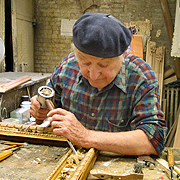

The House of Heydenryk (pronounced HI-den-rike) was founded in 1845 in Amsterdam. The firm employed the finest gilders and carvers in Holland to restore antiques and produce picture frames in styles dating from the 15th through the 18th centuries. Heydenryk also amassed one of the most extensive antique frame collections in the country and provided period pieces to art dealers, artists and collectors in the Netherlands.
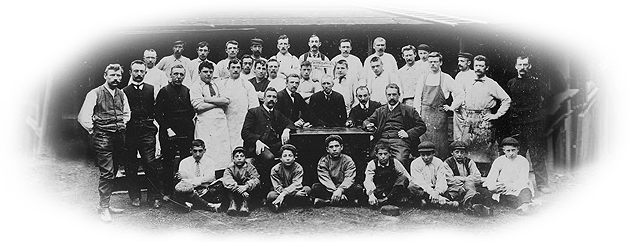
The staff of the House of Heydenryk in Amsterdam, Holland, October 5th, 1907
By the mid-20th century, the House of Heydenryk was regarded as one of the world's most prestigious picture frame companies. Its clientele included the greatest museums in Europe, from the Tate and National Gallery in London to the Rijksmuseum in Amsterdam. Heydenryk worked with Baron Thyssen-Bornemisza and members of the Rothschild family, framing some of the most important private art collections in history.
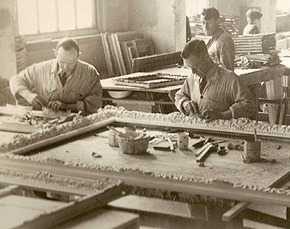
The House of Heydenryk (Heijdenrijk) factory in Amsterdam, early 20th century
In addition to restoring such 17th-century masterpieces as Rembrandt's The Night Watch, the firm chose and produced frames for many major Impressionist and Post-Impressionist paintings of the 19th and 20th centuries. Legend has it that a struggling young artist named Vincent van Gogh came into the showroom offering his drawings in exchange for a Heydenryk frame. Over 100 years later, the House of Heydenryk would supervise and provide all of the framing for the Van Gogh Museum in Amsterdam.
As its success grew, the House of Heydenryk opened offices in London, The Hague and Brussels. Now established as one of Europe's premier picture framers, the company looked to the United States as the next logical step for its expansion.
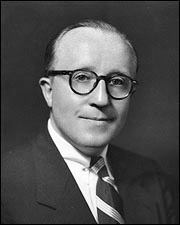
Henry Heydenryk, Jr. (1905-1994)
Henry Heydenryk, Jr., representing the fourth generation of the family-run business, was the obvious choice to bring the firm's services to America. Although young Henry had worked in the Amsterdam shop learning carving, gilding and frame history, his first work experience after graduation was as a punch-card machines sales manager for Remington Rand. He was multi-talented and was able to speak and write in six languages. His assignments took him to Europe, Canada and the United States, where he eventually settled in upstate New York. Finally, in 1936, Henry Heydenryk, Jr., agreed to start a Heydenryk branch in Manhattan, but he would do so on his own terms.
In the beginning, Mr. Heydenryk imported frames from Holland and France, and sold them to the New York fine arts community. His vast knowledge of picture frames and their history proved invaluable as museums, collectors and galleries sought out his expertise. The Museum of Fine Arts in Boston was one of his earliest clients.
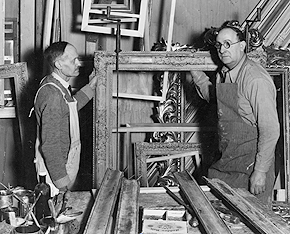
January 1940 photograph of artisans in the N.Y. factory
As his business increased, Mr. Heydenryk hired European craftsmen to produce his work in a rented workspace above a showroom. He decided not to limit himself to the set pattern of period frame reproductions, and instead would create new finishes and designs for developing artists in New York and the rest of the country. Up until the 20th century, picture frame styles were often governed by architectural trends and the selection was frequently a mechanical process. This situation reached its zenith in the 19th century, when bright gold and ornate compositional mould frames were routinely used on paintings with little regard for design or color.
Just as 19th-century Impressionist painters created new frame finishes to suit their palettes, Mr. Heydenryk revolutionized framing by designing alternative solutions based on aesthetic values. As a result, the artwork is enhanced instead of overpowered by the frame. In addition to inventing new mouldings, finishes and carvings, Heydenryk is credited with introducing the wormy chestnut frame in 1938. He used wood from trees destroyed by blight and applied new finishes, both painted and stained, that worked superbly with a wide variety of paintings, from primitive portraits to rural landscapes.
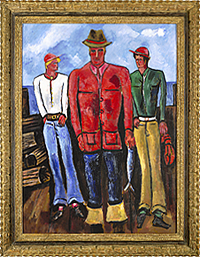
Down East Young Blades c. 1940, 30" x 40" oil on masonite by Marsden Hartley. Courtesy of the Wadsworth Atheneum Museum of Art. In 1937, Mr. Heydenryk began designing new mouldings and finishes for his friend, the Modernist painter Marsden Hartley. The hand-carved Model 385 frame was produced on wormy chestnut wood and was a particular favorite of Hartley's.
Mr. Heydenryk took a special interest in emerging young artists in the United States. He had a great eye for talent and would often encourage and support painters by lending custom-made frames on consignment for gallery exhibitions. In 1937, Mr. Heydenryk befriended the American Modernist painter Marsden Hartley, who at the time could not afford to frame his own work and was using one-inch liners instead of full frames. Hartley had hoped that the buyer would decide on and purchase a frame after the sale. When the Hudson Walker Gallery exhibited its first show of Hartley's in 1938, the House of Heydenryk designed and loaned out frames for the exhibition. The firm would be reimbursed if the works sold.
"It worked out beautifully," Mr. Heydenryk recalled later in an interview. "Hartley was very happy about the fact that his paintings looked fully dressed."1 Hudson Walker would later maintain that the Heydenryk frames contributed greatly to Hartley's rise in reputation and sales in the 1940s.2 Mr. Heydenryk and Hartley continued to work together until the artist's death in 1943.3 The frame designs created exclusively for Hartley are still made in the present-day shop, and the originals are now considered collectibles.
In addition to Hartley, many major American artists of the 20th century visited the Heydenryk showroom to frame their original paintings. Edward Hopper was a client for 20 years, first visiting the shop in 1947 and used Heydenryk designs on such 1960s masterpieces as A Woman in the Sun (Whitney Museum) and his last oil painting before his death in 1967, Two Comedians. Mr. Heydenryk worked directly with such Modernist masters as Georgia O'Keeffe, John Marin, Stuart Davis, Milton Avery, Charles Sheeler, Max Weber, Jacob Lawrence and Romare Bearden. The renowned figurative painters Andrew Wyeth, Philip Evergood, and Raphael and Moses Soyer also came to the House of Heydenryk to frame their works.
During the 1940s and 1950s, Mr. Heydenryk simplified and modified his designs to meet the needs of the Abstract Expressionists. He supplied picture frames for early gallery exhibits by such artists as Robert Motherwell, Adolph Gottlieb and William Baziotes.
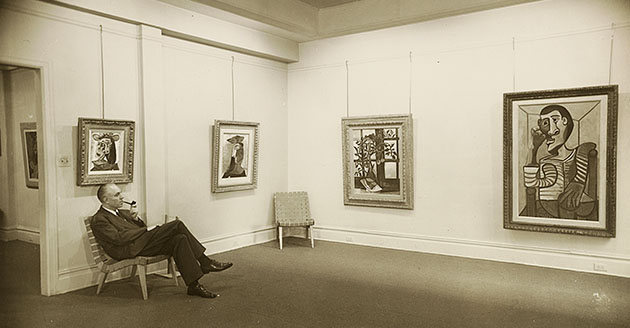
In 1947, the American art dealer Samuel Kootz presented the first postwar exhibition of Picasso's paintings using Heydenryk's original frame designs.
Mr. Heydenryk's influence was not limited to American artists. From 1945 until 1965, Mr. Heydenryk worked closely with Samuel Kootz, the only American art dealer who was allowed access to Pablo Picasso's studio in Europe. In 1947, the first postwar exhibition of Picasso in America was presented in Heydenryk frames. In the late 1950s, Mr. Heydenryk created a series of hand carved frames designed specifically for Picasso's last exhibitions in the U.S. before his death. In 1969, the firm sold a frame directly to Picasso. The House of Heydenryk also framed the Kootz Gallery's inaugural exhibition of paintings by Fernand Léger, who lived in Manhattan during the 1940s.
Mr. Heydenryk worked regularly with the world's leading art dealers and made frames for gallery exhibitions of premier works by Henri Matisse, Marc Chagall, Joan Miró, Balthus, Jean Dubuffet and Yves Tanguy as well as Latin American artists including Wifredo Lam, Rufino Tamayo, Roberto Matta and Leonora Carrington. The legendary Mexican painters Diego Rivera and Frida Kahlo shared a studio in the same building as Mr. Heydenryk's first Manhattan office and visited his showroom. In later years, the House of Heydenryk would frame many of their masterworks for auction houses, dealers and collectors.
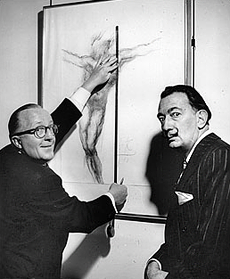
Salvador Dalí and Mr. Heydenryk collaborated on numerous framing and other art-related projects during the 1950s and 1960s. Many of the frames that were designed for Dalí are based on 16th- and 17th-century motifs and are still made in the present-day shop.
Mr. Heydenryk would create a design or finish that would suit a painter's particular style and then name the moulding after the individual who inspired the frame. These artists include Georges Rouault, Maurice de Vlaminck, Paul Klee and Piet Mondrian, a fellow Dutchman who was a representational landscape painter when he first visited the Amsterdam offices to frame his work.
Salvador Dalí was a frequent visitor to the shop for three decades from the 1940s through the 1960s. He would often enter the showroom with a new original painting in one hand and a leashed ocelot on the other. Dalí purchased Renaissance-period frames or custom-made Heydenryk originals that enhanced his surrealist imagery. In 1958, the Owen Cheatham Foundation sponsored the unique, once-in-a-lifetime collaboration between Mr. Heydenryk and Dalí in which the two masters created lighted shadow boxes for 28 Dalí-designed jewels. The exhibition toured and was seen across the country and was covered extensively by the press.
The House of Heydenryk worked with many of the top contemporary portraitists of the day, framing paintings of U.S. presidents for the White House and of other government officials, heads of state, CEOs and celebrities. In addition to painters, two of the 20th century's most renowned portrait photographers, Yousuf Karsh and Richard Avedon used Heydenryk to frame their works.
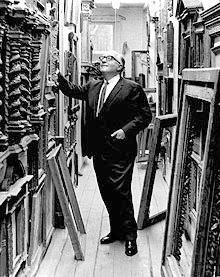
Mr. Heydenryk amassed one of the largest antique picture frame collections in the United States. The House of Heydenryk continues to provide period frames for museums, galleries and collectors on a worldwide basis.
Mr. Heydenryk continually searched for period frames across the United States and Europe, and gradually built up one of the largest collections in the nation. Museums, dealers and private collectors sought his advice in choosing and locating historically accurate antique frames for their artwork.
Mr. Heydenryk was an early champion of the American picture frame at a time when many period frames that had been made in the U.S. were being dismissed or even discarded. In 1980, the House of Heydenryk purchased the entire antique frame inventory from the Colonel Edgar W. and Bernice Chrysler Garbisch estate, which included the most important private collection of American folk art in the world.
By the end of the 1950s, Mr. Heydenryk had assembled an international work force of the finest gilders, carvers, carpenters and consultants available. As the staff and frame inventory increased, the firm eventually moved its quarters to a five-story building on the Upper East Side in Manhattan. The House of Heydenryk continued its relationship with the European branch, but the New York office was now a separate entity, creating and building frame designs that were exclusive to the United States.
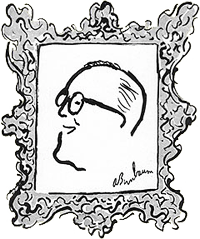
1963 caricature of Henry Heydenryk, Jr.
By the 1960s, the House of Heydenryk had its own antique and reproduction picture frames hanging in nearly every major museum in the country. The Museum of Fine Arts in Boston, the Philadelphia Museum of Art, the Metropolitan Museum of Art in New York, the Frick Collection, the Whitney Museum of American Art, the Baltimore Museum of Art, the Art Institute of Chicago, the Virginia Museum of Fine Arts, the Georgia Museum of Art, the Corcoran Gallery of Art, the Chrysler Museum of Art, the Toledo Museum of Art, the Detroit Institute of Arts, the St. Louis Art Museum, the Kimbell Art Museum, the Norton Simon Museum, Seattle Art Museum, the Smithsonian Institute, the Cleveland Museum of Art and many others used Heydenryk to frame some of the greatest masterpieces in art history. In the 1970s, the National Gallery of Art in Washington, D.C. appointed Mr. Heydenryk as the official frame consultant to their collection.
The House of Heydenryk produced and/or provided antique and reproduction frames for seminal works by artists ranging from Old Masters such as Vermeer, Rembrandt, Van Eyck, Rubens, Ruisdael, Raphael, Titian, Botticelli, Veronese, Mantegna, Bronzino, Pontormo, Giorgione, Tiepolo, Velázquez, El Greco, Ribera, Watteau, Boucher and Chardin to such 19th-century painters as Ingres, Corot, Courbet, Manet, Degas, Turner, Eakins, Whistler, Sargent, Cassatt and Homer.
Mr. Heydenryk had an extensive relationship with the Museum of Modern Art in New York, and worked directly with the co-founder Mrs. Cornelius J. (Mary) Sullivan, the director Alfred H. Barr, Jr., and the senior curator Dorothy Miller on numerous projects. The House of Heydenryk created picture frames for some of the most famous images in the museum's permanent collection by artists including Paul Cézanne, Georges Seurat, Claude Monet, Henri Rousseau, Amedeo Modigliani, Jackson Pollock and Andrew Wyeth.
Interior design and architecture provided another outlet for Mr. Heydenryk's endless creativity. He collaborated with some of the leading decorators and designers in American history, including McKim, Mead & White, Sister Parish, Albert Hadley, Melanie Kahane and William Pahlmann, who wrote the foreword to Mr. Heydenryk's second book. Heydenryk frames are highlights in the most beautiful homes in the world and are featured in such national historic landmarks as the White House, Carnegie Hall, the U.S. Supreme Court, the U.S. Capitol, the Pentagon, the U.S. Department of the Treasury as well as the Metropolitan Opera House.
Royalty such as the Duke and Duchess of Windsor and such Hollywood icons as Marlene Dietrich, Katharine Hepburn, Ginger Rogers, Lauren Bacall and even the reclusive Greta Garbo frequented the store for framing advice. Hepburn was not only a loyal client for decades but also a friend, visiting Mr. Heydenryk in his retirement.
In 1961, when the Kennedy administration ushered in an era of grace and style, the Smithsonian Institute called upon Mr. Heydenryk to reframe many paintings in the White House. He designed new frames for a collection of artwork by George Catlin, the 19th-century painter of American Indians and worked with the esteemed interior design firm Parish Hadley on the project.
In 1962, the Eastman Kodak Company commissioned Mr. Heydenryk to produce 52 custom-made frames for the United Nations, placing each ambassador's photographed portrait in a design suited to his/her country's origin.
In 1963, the New Yorker magazine sent a reporter to the House of Heydenryk to complete a feature on picture framing. The writer and editorial staff were so impressed by the firm's workspace and history that they decided to feature an unprecedented 17-page profile about Mr. Heydenryk and his many accomplishments.
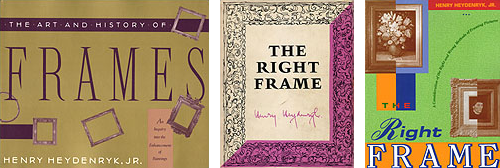
Mr. Heydenryk was the author of two landmark books on picture framing, The Art and History of Frames (left) in 1963, and The Right Frame in 1964 (both published by James H. Heineman, Inc.). The Right Frame is pictured in both its original cover (center) and its reissued version (right) in 1993 (published by Lyons and Burford).
Henry Heydenryk, Jr., was now regarded as the preeminent authority and maker of picture frames in the United States. In 1963, he wrote The Art and History of Frames: An Inquiry into the Enhancement of Paintings (James H. Heineman, Inc.), the acknowledged and definitive reference book on the subject. Mr. Heydenryk followed this with The Right Frame: A Consideration of the Right and Wrong Methods of Framing Pictures (James H. Heineman, Inc.)4 in 1964, which became the essential guide to choosing the correct picture frame for artwork. He promoted the book by giving an extensive lecture tour, appearing at museums across the country and on television programs such as the Today Show where he was interviewed by a young Barbara Walters.
In 1973, the U.S. Department of the Interior selected the House of Heydenryk to restore and supply over 100 antique frames for the bicentennial of the Declaration of Independence that was to be held in Philadelphia in 1976.
In the mid-1970s, Mr. Heydenryk retired from picture framing and was succeeded by his protégé Charles Schreiber as president and manager of the firm. In 2004, David Mandel took over as president of the company. The House of Heydenryk continues to produce many of the vintage designs that made its reputation as well as create new frame profiles for the changing art scene.
Mr. Heydenryk painted landscapes and traveled with his beloved wife Rigmor in his later years, where he marveled at the widespread use of his frames in art exhibitions throughout America and Europe. On June 23, 1994, Henry Heydenryk, Jr., died at the Mary Elizabeth Nursing Home in Mystic, Connecticut. The New York Times paid tribute to his many accomplishments and called him "the concertmaster of his trade."4 His legacy can still be seen in museums, galleries, private collections and most of all, at the House of Heydenryk headquarters in New York City, where artisans realize his vision and continue to influence and enhance the worlds of fine arts and interior design.
Dedicated to the memory of Henry Heydenryk, Jr. (1905-1994). The History section is a tribute to Mr. Heydenryk and covers the 40-year period (1936-1976) when he was active in the American firm.
Notes
1 Interview with Henry Heydenryk, Jr., conducted by Elena Borowski for the Smithsonian Institute, September 3, 1981. Courtesy of William Adair.
2 Interview with Hudson Walker conducted by John Brooks from the New Yorker article, "An Enhancing Adjunct," April 27, 1963.
3 The House of Heydenryk provided picture frames for all of Marsden Hartley's exhibits at the Hudson Walker Gallery (1938-1940), Macbeth Gallery (1941-1942) and the Paul Rosenberg Gallery (1943).
4 In 2002, Lyons Press published The Right Frame: The Essential Guide To Framing using Mr. Heydenryk's original text with images of new and inferior commercial chop and join frame mouldings. This revised book was done without the permission, cooperation and participation of the Heydenryk estate and we do not endorse or recommend this product.
5 The New York Times obituary of Henry Heydenryk, Jr., June 25, 1994.
Thanks to: F.A. van Kempen (Heijdenrijk in Amsterdam), Margit Rigmor Heydenryk, the Wadsworth Atheneum Museum of Art, Boyce Benge, Laura Mitchell.
Thanks to Peter Werkhoven at Aedicule Fine Framemaking (www.aedicule.com) and Gehring & Heijdenrijk (www.gehringenheijdenrijk.nl) for the use of the vintage Heidenrijk factory image.
Special thanks to William Adair for his support, friendship and scholarship.
Note: the original Dutch spelling of the firm is "Heijdenrijk." The New York branch uses the American version, which is spelled "Heydenryk."
Hartley's Down East Blades image is courtesy of the Wadsworth Atheneum Museum of Art (the Douglas Tracy Smith and Dorothy Potter Smith Fund, the Evelyn Bonar Storrs Trust Fund, the Krieble Family Fund for American Art, the Dorothy Clark Archibald and Thomas L. Archibald Fund).
The Samuel Kootz Picasso exhibit photograph is courtesy of the Smithsonian American Archives of American Art.